
Let me be honest for a second.
A few years ago?
AI voices sounded… terrible
Awkward pauses.
Robot energy.
Zero emotion.
You could instantly tell:
“Yep… definitely AI.”
But recently?
Things changed fast.
Really fast.
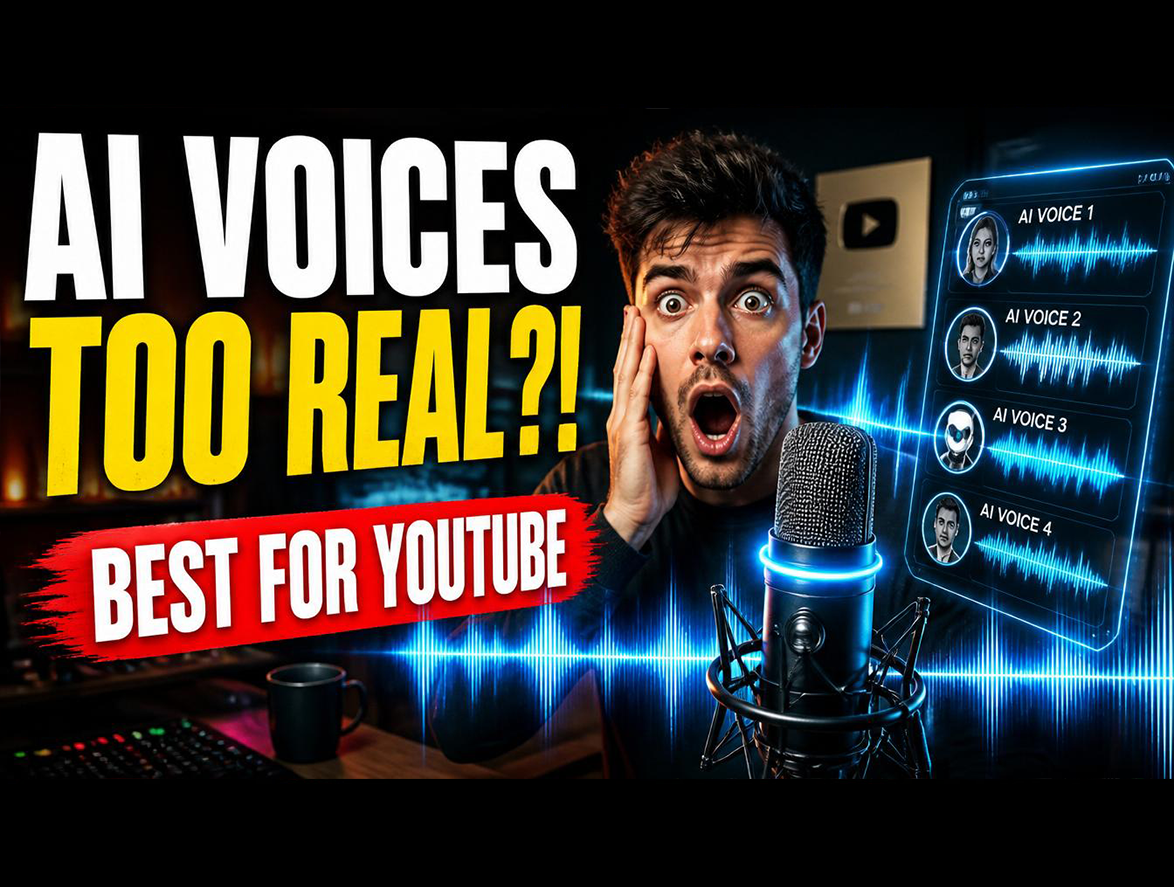
Some AI voice generators now sound surprisingly human.
To the point where creators are quietly building entire YouTube channels using them.
Especially:
- Faceless YouTube channels
- YouTube Shorts creators
- Podcast clips
- Educational videos
- Storytelling content
So naturally?
I got curious.
Which AI voice tools are actually worth using?
And which ones just sound weird?
I tested popular options creators keep talking about.
Here are the ones genuinely worth looking at in 2026.
1. ElevenLabs (Best Overall)
If creators keep recommending one tool?
It is probably ElevenLabs.
And honestly?
After trying it… I understood why.
The voices feel surprisingly natural.
Especially for:
- YouTube storytelling
- Faceless channels
- Educational videos
- Motivational content
What stood out most?
The emotion.
It sounds less robotic than many alternatives.
Pros:
- Very realistic voices
- Multiple accents
- Voice cloning features
- Great for storytelling
Cons:
- Free plan feels limited
- Can become expensive for heavy creators
Official website: ElevenLabs
2. Murf AI (Best for Professional Voiceovers)
If your content feels more business or educational?
Murf AI feels surprisingly polished.
It sounds cleaner.
More professional.
Less emotional than ElevenLabs.
But honestly?
That can actually be a good thing.
Especially for:
- Business videos
- Tutorials
- Brand explainers
- Professional YouTube content
Pros:
- Professional-sounding voices
- Easy editing interface
- Great for tutorials
Cons:
- Feels less emotional
- Not ideal for storytelling channels
Official website: Murf AI
3. PlayHT (Best for Realistic Voice Variety)
This one honestly surprised me.
PlayHT has a huge voice library.
And weirdly?
Some voices sound incredibly realistic.
Especially if you want:
- Different narrator styles
- Accent variety
- Multiple-channel voices
Pros:
- Huge voice selection
- Good customization
- Multiple accents
Cons:
- Some voices still sound slightly robotic
- Takes testing to find the best voices
Official website: PlayHT
4. Descript (Best All-in-One Creator Tool)
This one feels different.
Because Descript is not only voice generation.
It also helps with:
- Video editing
- Podcast editing
- Captions
- Voiceovers
If you want fewer tools,
This can feel convenient.
Pros:
- All-in-one workflow
- Great for creators
- Easy editing system
Cons:
- Not the strongest voice realism
- Can feel overwhelming at first
Official website: Descript
5. Speechify (Best for Simple Voiceovers)
If you want something simple?
Speechify feels beginner-friendly.
Especially for creators making:
- Quick Shorts
- Voiceover videos
- Fast content
Pros:
- Easy to use
- Fast workflow
- Beginner-friendly
Cons:
- Less customization
- Can feel basic for advanced creators
Official website: Speechify
So… Which One Should You Actually Choose?
Honestly?
It depends on your style.
For faceless YouTube: ElevenLabs
For professional videos: Murf AI
For lots of voice options: PlayHT
For all-in-one creators: Descript
For beginners: Speechify
Creator trends discussed through YouTube Creator Academy often highlight how faster content systems help creators stay consistent.
Final Thought
Honestly?
AI voice generators are getting scary good.
Not perfect.
But surprisingly useful.
Especially if:
You hate recording voice-overs.
Want to scale Shorts.
Or are you building a faceless channel?
Just remember:
The tool matters.
But storytelling still matters more.
Need Better Creator Branding?
SSCreation helps creators grow through thumbnails, storytelling, visuals, and content systems designed to actually get attention. Grow Smarter